

Interview with the people behind the Asylum Report
The Agency’s Asylum Report, drawing from over 1000 sources and including both quantitative and qualitative analyses, is the result of long efforts of professionals with different profiles. We have spoken with three of the people behind the Asylum Report 2024. Read their interview to find out more about the process, how the report has changed over the past years and their main highlight from this job.
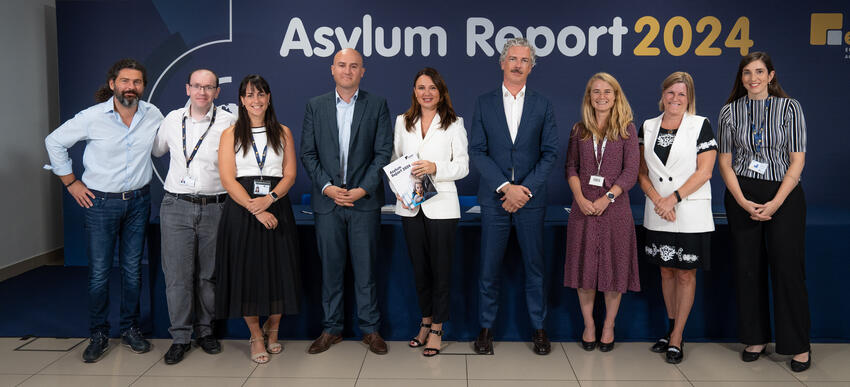
Can you briefly introduce yourselves and your roles at the EUAA?
My name is Judit Tanczos and I am a Senior Information and Analysis Officer at the Information and Analysis Sector (IAS), under the Asylum Knowledge Centre of the EUAA.
My name is Thanos Gatsias and I am a Research Assistant in the same sector.
I’m Katja Frostell and I’m an Editor in the same sector. The three of us, along with Jadwiga Maczynska, the Head of our Sector, coordinate the production of the Asylum Report, the annual series that provide a comprehensive overview of key asylum-related developments in EU+ countries.
What makes the Asylum Report the flagship Report of the EUAA? What can we find in this Report?
The Asylum Report is the most detailed and in-depth yearly analysis of the world’s only multinational asylum system. The report describes changes to asylum policies, practices and legislation in EU+ countries; summarises challenges which persist; and, with the kind contribution of colleagues from the Data Analysis and Research Sector, highlights main trends across key statistical indicators. Each step of the asylum procedure is described to understand how EU+ countries have reacted to changing migratory patterns. Examples of case law serve to showcase how courts have shaped the interpretation of EU and national laws related to international protection.
Importantly, a key strength of the report is the diversity of sources consulted to report on activities. Input from national authorities, EU institutions, international organisations and civil society organisations is synthesised to provide a comprehensive overview that reflects the multiple perspectives of the complex reality of asylum.
How has the Asylum Report changed over the past years?
We continuously strive to improve the format and content of the report. Changes undertaken over the years are based on feedback from colleagues and readers, new reporting requirements, for example from the EUAA Regulation, and new online tools made available through changing communication methods.
The Report has changed in a number of ways over the past years, in terms of methodology, the production process and the format. For example, in the past we relied heavily on input collected by third parties, but we have streamlined our research and collect information ourselves throughout the year from various stakeholders. In addition, as of last year, instead of Eurostat data we use data exchanged by EU+ countries under the EUAA’s Early Warning and Preparedness System (EPS), which means that the report can be published earlier.
To make the report more easily accessible, we produce a number of accompanying resources which provide a summative overview of information included in the report and a more focused presentation of key themes of interest. We have also embraced new digital initiatives, moving away from print publications and focusing on online storytelling and HTML publications.
What do you enjoy the most about working on the Asylum Report?
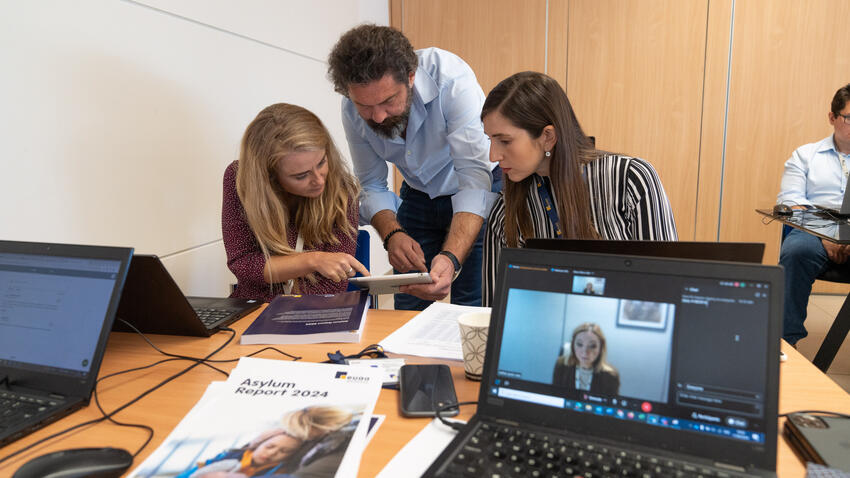
It is always fun to engage with so many stakeholders, get their perspective and benefit from the insight they bring into the analytical process. These dialogues we have throughout the production process help us stay relevant and have a nice, updated, inclusive overview of developments in the field. Maybe one of the things we enjoy the most is working with colleagues internally! There is a certain level of camaraderie that is created when you work on a team that tries to tackle such a major task as the production of the Asylum Report, while managing large amounts of information and adhering to strict production timelines. Among the coordination team, we have found just the right amount of humour to ease pressure during the production period and to celebrate achievements.
Where can we find the report and additional resources?
The Asylum Report is available on the EUAA website.
The storytelling page provides a nice visual overview of key developments in 2023.
Other accompanying resources include:
- The Executive Summary of the report, which is available in all EU languages and 7 non-EU languages
- The National Asylum Developments Database allows users to easily search practical, policy and legislative changes by country, year, and theme
- And the following factsheets which provide key developments on a specific topic
- LGBTIQ applicants in asylum systems
- Protecting women and girls in the asylum procedure
- The personal interview in the asylum procedure
- Data analysis of decisions on asylum applications and recognition rates at second or higher instances in 2023
We encourage you to consult all of these resources and reference them in your work. We welcome any feedback – whether it’s positive encouragement or ideas for the future!