

Meet EUAA’s Judicial Experts
The EUAA can now proudly announce that there are 99 judicial experts from 18 EU and associated countries in the EUAA Judicial Experts’ Pool.
Since its creation, the Pool has met annually to exchange and shape innovative judicial training activities in the field of asylum.
In December 2022, over 50 judicial experts developed practical insights and exchanged on judicial skills specific to asylum judges, through discussions on best practices and group exercises. They reflected on how to remain impartial and deal with bias in international protection cases, communication challenges in the context of online hearings, the centrality of interpretation, the impact of multilingual communication, and intimacy and trauma in the courtroom.
Please present yourself and explain your role as a judge specialised in the field of international protection.
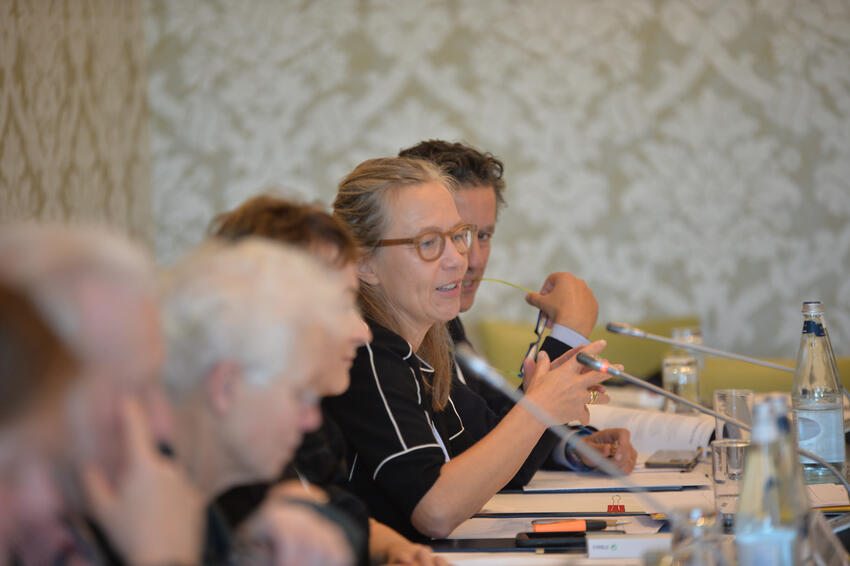
Dear readers, my name is Hilkka Becker (HB) and I originally qualified as a lawyer in Germany.
I have been living in Ireland since 1998 and qualified to practice here in 2003. I initially worked in private practice, the NGO sector and in an international organisation before being appointed to the then Refugee Appeals Tribunal as a part-time Tribunal Member in 2013.
After a short period as the first Deputy Chairperson of the newly established International Protection Appeals Tribunal, I am now the Chairperson of the Tribunal since April 2017. In that role, and in addition to my own decision-making, I ensure that the functions of the Tribunal are performed efficiently, and that the business assigned to each Tribunal Member is dealt with as expeditiously as possible, consistent with fairness and natural justice. A ‘court or tribunal’ pursuant to Article 267 TFEU, the Tribunal is the first instance appellate body in relation to refugee status and subsidiary protection, Dublin transfers, inadmissibility, subsequent applications, and certain reception condition decisions – reviewing decisions in fact and law.
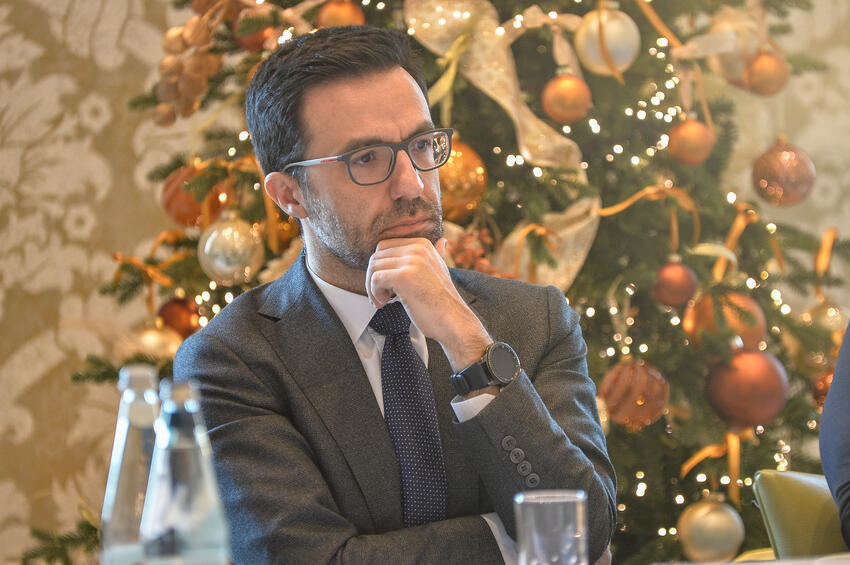
My name is Stergios Kofinis (SK) and I am an administrative judge serving at the First Instance Administrative Court of Thessaloniki, Greece.
My current post is at the Asylum and Immigration Law Chamber of the Court. Before that, I was a member of the Independent Appeals Committees of the Ministry of Immigration and Asylum for two years.
Even though there are significant differences between the two assignments, since at the Court we hear applications for annulment on points of law, while Appeals Committees (which are quasi-judicial bodies) have full jurisdiction over facts and law, my role remains the same: to assess the applicant’s need for international protection and make sure that all procedural guarantees are respected.
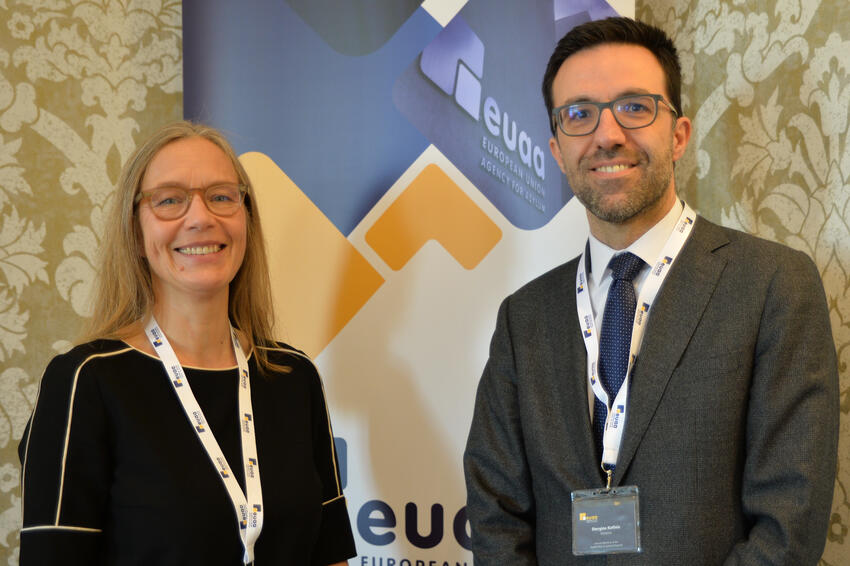
Could you share some information about your role and tasks as an EUAA judicial expert? When did you start and why did you decide to apply?
HB: My involvement in EUAA activities began when my predecessor tasked me with representing the Tribunal at a meeting of the national contact points of the Courts and Tribunal Network in 2015.
When I started contributing to the production of the five first judicial analyses on different topics in the CEAS, as part of the International Association of Refugee and Migration Judges (IARMJ)’s editorial team the following year, I delivered my first professional development workshop on the issue of exclusion from international protection in Malta in September 2016; since then, I have acted as a judicial expert and trainer on a regular basis, most recently on evidence and credibility assessment in Thessaloniki in November 2022.
SK: I became a member of the EUAA Judicial Experts’ Pool in 2019. I had already been working on international protection cases for some time and had attended two or three judicial workshops under the-then EASO. The judicial training procedure, as organised by the Agency, was very stimulating and the idea of being a member of a network of specialised judges across EU seemed very appealing, so I decided to apply. In fact, being a member of the Pool doesn’t entail many tasks by itself – members have the possibility of deciding whether they want to apply to deliver a specific training session or to contribute to other events or publications. One (online or hybrid) meeting takes place annually focusing on specific issues of international protection. Personally, I have delivered three workshops, two for judges and one for rapporteurs of the Greek Independent Appeal Committees.
What did you learn from the experience of being an EUAA judicial expert while preparing and delivering workshops for fellow members of courts and tribunals from different EU and associated countries?
HB: Being part of the Pool has been beneficial to me on several levels. Firstly, the provision of workshops requires extensive preparation and familiarity with the subject; over the years that has expanded my own expertise, giving me also the opportunity to become familiar with the ways in which the Common European Asylum System (CEAS) is implemented throughout the EU and Schengen-associated countries. Additionally, I find it most enjoyable to engage with colleagues from courts and tribunals of other countries, both as co-trainers and as participants, and with the wonderful Courts and Tribunals Team in the EUAA who have been so generous in providing their expertise in training delivery and collaboration so that the workshops could be a success for all involved.
SK: Preparation of workshops is a time and energy consuming process. Participants are more or less experienced judges from different countries around the EU and beyond and this raises the bar for judicial trainers, because we have to offer high-level presentations and be ready to answer questions that sometimes are very specific and demand a deeper knowledge of the subject. However, it is exactly this that makes it worthwhile. Preparing for the workshops on credibility assessment allowed me to develop a much better understanding of the subject, but also of other topics of international protection – an asset that has proven to be a great help when dealing with cases myself, as a judge. Equally important is the feedback you get from your fellow judges from other EU countries – I realised that we all face similar problems and that we all struggle, within the constraints of each country’s judicial system, to find the best possible solutions.
Do you think that the covid pandemic created new opportunities for remote judicial training? What is your view on the effectiveness of online judicial training and what different skills that type of training necessitates?
HB: While the COVID-19 pandemic did stop our direct personal engagement for many months and I missed the informality (and fun!) with which one is able to engage directly with colleagues when meeting in person, it has been amazing to see how well the EUAA, as well as judges and tribunal members throughout the EU+, have been able to adapt to the situation and move workshops, expert panels and meetings online. The new format of online meetings has allowed us to keep in touch and continue to share our experiences and learn from each other.
I hope that we will maintain a level of engagement online while moving back to in-person meetings at regular intervals, providing a good mix of the greater accessibility and smaller carbon footprint the online format allows with the more intensive in-person meetings at EUAA Headquarters in Malta and in other locations. I think the online format is particularly well suited for expert panels and lecture style presentations. However, I was surprised to discover how relatively well the workshops, including the use of breakout groups and moot courts worked online. The delivery of online workshops over the last few years now has certainly required a more conscious effort to achieve interactivity with participants. This is something I have already benefitted from when delivering training sessions in-person both with and for the EUAA, as well as at home in Ireland.
SK: Two of the workshops I delivered were held online because of the pandemic restrictions. Apart from that, during the COVID-19 pandemic I have delivered and attended many other online seminars. Though this experience has shown the advantages of remote training, I still believe that it cannot fully replace face-to-face training.
The main challenge with online training is keeping the audience engaged. Participants tend to lose their focus and are less likely to actively participate in workshop activities. On the other hand, the advantage of online training is that more people can participate since costs are minimal and no time spent on travelling, which allows for participants with heavy workloads (as with most judges) to squeeze them into their schedules. Thus, I think the online format is better suited for shorter sessions, such as the EUAA expert panels that the Agency organises on various topics or the lunch-time seminars organised by the European Judicial Training Network. These are usually one or two-hour long and are dedicated to specific issues. In virtual workshops that last one or two full days trainers must really use all the tricks in the playbook to encourage participants to actively take part in the workshop activities.
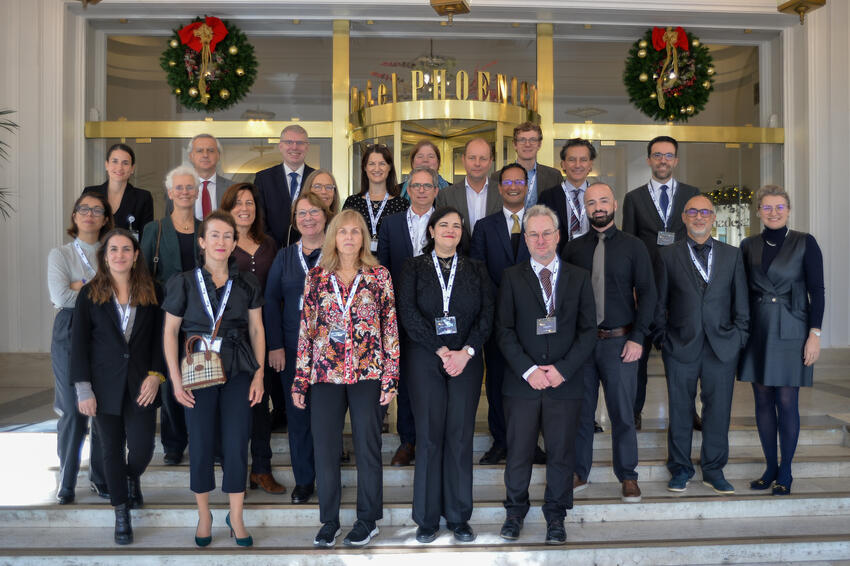
Much can be learned from preparing and delivering a training session. How has EUAA support to members of courts and tribunals benefited you, your court and your everyday practice?
HB: Definitely! Preparing training sessions forces me to take the time to re-visit my previous learnings, to ensure that I am fully up to date with the recent jurisprudence of the Court of Justice of the European Union (CJEU) and the European Court of Human Rights (ECtHR) and also to be ready to provide some examples from Irish case-law in order to illustrate the practical application of the CEAS in Ireland.
SK: The EUAA support is of paramount importance for courts and tribunals around Europe. The EUAA has become the main judicial training body on international protection law in the EU and many of us have strengthened our expertise on international protection law through its workshops and specialised trainings. Being a trainer myself, I can see the benefits of the knowledge acquired during the preparation of workshops in the execution of my own judicial duties. What is even more important, in my opinion, is that the participation in EUAA workshops allows for interactions between judges coming from different legal traditions but facing the same challenges when dealing with international protection cases. This gives participating judges the opportunity to have a different perspective of the problems they face and to get a sense of belonging to a single European judiciary.
Would you recommend to other judges to become an EUAA judicial expert? In your view, what are the essential qualities a judicial expert should possess?
HB: In addition to advanced expert knowledge and experience, I think one must be flexible and open to learning and to enjoy engagement with judges and tribunal members working in other jurisdictions. Working as an EUAA judicial expert has been a fantastic experience for me and has helped me grow on a professional and personal level over the last seven years. The exchanges with colleagues from courts and tribunals throughout the EU+ has been most fruitful and it is just amazing to see how generous others, including colleagues with much more experience and professional seniority than me, have been in sharing their time and expertise, helping others, including me, to develop in their roles as judges and, in the case of Ireland, tribunal members. Thank you all and thank you to the EUAA for the facilitation of the Courts and Tribunals Network and related activities – I look forward to contributing to this work in the future!
SK: The three main qualities a judicial expert should possess are experience in the field of international protection, adequate knowledge of the English language, and (probably the most important) willingness to devote the time and effort needed in order to provide participants with the best training possible. I would recommend it to any judge who specialises in international protection law and feels confident that they possess these qualities to apply to be a member of the Pool. It is both interesting and satisfying to be able to meet with colleagues from around Europe and share ideas and experience with them.