

News
News Published: 7 November 2025
Lebanon one year later: EUAA report highlights persistent and overlapping challenges
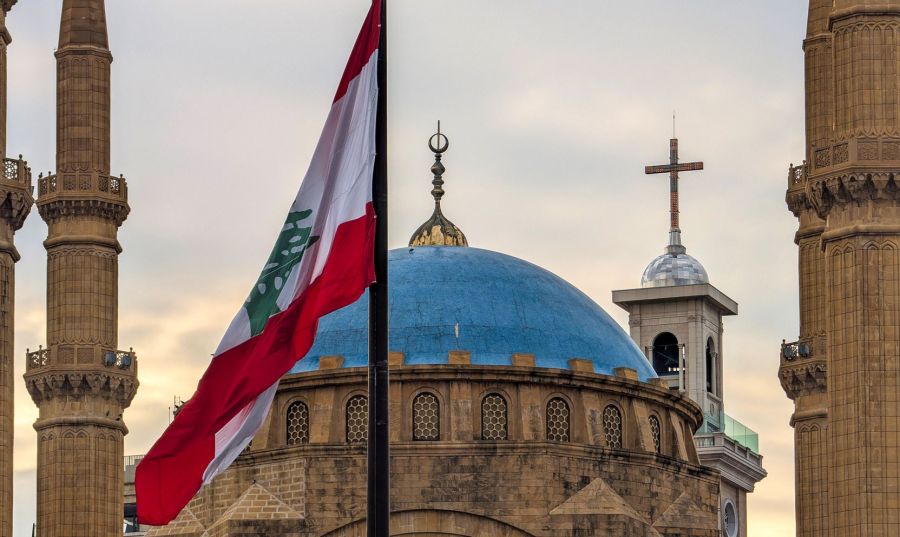
The EUAA has just published its first Country of Origin Information (COI) report on Lebanon. It offers an overview of State structures, political and economic developments, the legal system and judiciary, security institutions, non-State armed groups and the security situation. The report also sheds light on the situation of specific profiles, aimed at informing the examination of asylum claims from Lebanese nationals.
Lebanon continues to face overlapping political, security, and economic challenges amid the aftermath of the 2024–2025 conflict between Hezbollah and Israel. The election of President Joseph Aoun in January 2025 ended a two-year institutional vacuum, bringing about the formation of a new government led by Prime Minister Nawaf Salam. The new administration has prioritised restoring state authority by addressing the severe economic downturn and advancing discussions on the disarmament of Hezbollah and other non-state armed actors. However, progress remains fragile, as Hezbollah and Amal ministers continue to oppose the Army’s plan to assume exclusive control over weapons.
Lebanon’s confessional political system remains central to governance and continues to shape state institutions. Despite efforts to strengthen the judiciary and armed forces, political interference and sectarian divisions undermine the rule of law and accountability.
The Lebanese Armed Forces (LAF), although active in the south alongside the United Nations Interim Force in Lebanon (UNIFIL), faces resource shortages and operational challenges. With its mandate extended until December 2026, UNIFIL is continuing to support the LAF in maintaining peace along the Blue Line, the UN-demarcated boundary between Lebanon and Israel. However, the Israeli airstrikes of late 2024 caused significant destruction and internal displacement, particularly in southern Lebanon, where up to 40 % of buildings were damaged or destroyed. The hostilities have also exacerbated Lebanon’s preexisting economic crisis, with unemployment above 29 %, widespread poverty, and millions facing food insecurity.
The EUAA report further highlights the situation of specific groups, including women and girls, political opposition members, human rights defenders and activists, journalists and media workers, LGBTIQ persons, and refugees. Syrian and Palestinian refugees continue to face precarious legal status, restricted access to services, and socio-economic marginalisation. The government, in coordination with the Palestinian Authority, has begun limited disarmament within some camps, though key factions remain armed.
EU Asylum situation for Lebanese nationals
Between May 2024 and August 2025, Lebanese nationals lodged slightly over 3 000 applications for international protection in the EU+, which is stable compared to the 16 months prior. Almost eight in ten applicants were seeking asylum in the EU+ for the first time, and fewer than 2 % were self-declared unaccompanied minors. Germany was the main destination country, followed at a distance by France and Sweden.
During this same period, EU+ countries issued approximately 3 100 first instance decisions on Lebanese applications, with a recognition rate of 12 %. At the end of August 2025, around 1 300 Lebanese cases were pending a first instance decision, representing a decrease of one quarter compared to May 2024.
Background
The EUAA regularly produces and updates Country of Origin Information reports, which aim to provide accurate and reliable up-to-date information on third countries to support EU+ national asylum authorities in examining applications for international protection in Europe.