

Relative pressure from asylum-related migrationi.

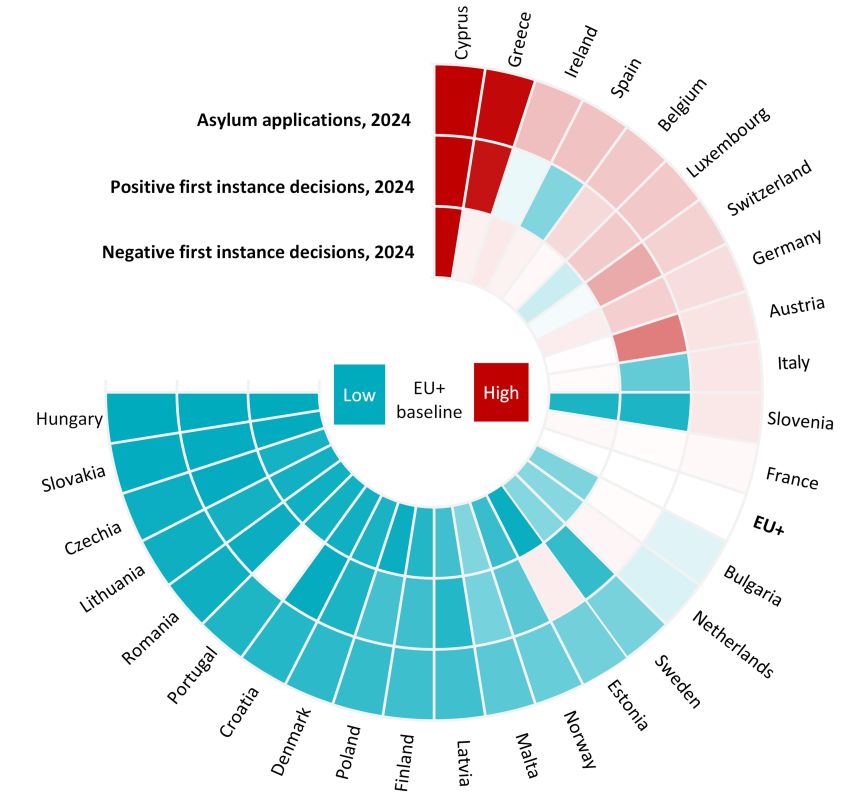
When considering asylum applications in relation to population size (see Figure 3, outer circle), on average about 2,200 applications per 1 million inhabitants were lodged across EU+ countries in 2024. Cyprus and Greece topped the list with each receiving over 7,000 asylum applications per capita. While the relative pressure declined notably from 2023 in Cyprus and Austria, national authorities in Belgium, Greece, Ireland, Italy and Poland were faced with more applications in relation to their population than a year earlier.
As seen in the past, EU+ countries issued more negative first instance decisions per capita (990 decisions per 1 million inhabitants) than positive ones (720). Both positive and negative decisions require resources, from providing support services (such as housing, education and healthcare) to beneficiaries of international protection to costs related to the removal of rejected asylum applicants. Cyprus faced the highest pressure from negative decisions (see Figure 3, inner circle), while both Cyprus and Greece issued the most positive decisions per capita (see Figure 3, middle circle).
The Top 5 nationalities of applicants for international protection in EU+ countries remained the same as in 2023: Syrians (151,000 applications), Afghans (87,000), Venezuelans (74,000), Turks (56,000) and Colombians (52,000). With the exception of Venezuelans who lodged a record number of applications, the remaining four citizenships lodged fewer applications than in the previous year. The most notable drop was by Turkish nationals seeking international protection.
While applications decreased for many nationalities beyond the Top 5, other citizenships reached all-time highs, including Bangladeshis (43,000 applications), Peruvians (27,000), Malians (17,000), Senegalese (14,000), Haitians (12,000), Sri Lankans (9,800), Chinese (7,200) and Mauritanians (5,700). In 2024, there was also a record number of Palestinians (12,000 applications) and a related increase in stateless applicants (3,600). Ukrainians (27,000) lodged the most applications since 2022 (even though this number was still much smaller than registrations for temporary protection). Almost one-half of all applications were lodged by 37 different nationalities which had recognition rates of 20% or lower at first instance.
Figure 3. Number of asylum applications and number of positive and negative first instance decisions per capita by EU+ country compared to the EU+ average, 2024
Source: EUAA EPS data as of 3 February 2025 and Eurostat demo_gind as of 9 January 2025.
Around one-quarter of asylum applications in EU+ countries were lodged by nationals of countries with visa-free access to the Schengen area, which means they can arrive on flights directly from their home countries. Spain received the largest share of such applications, with visa-free nationals accounting for three-quarters of its total inflow. Venezuelans and Colombians represented the majority of visa-free applicants in EU+ countries.
When examining the flows from the top countries of origin to the receiving countries, in 2024 the main dyads were Syrian, Afghan and Turkish applicants in Germany; Venezuelan and Colombian applicants in Spain; Bangladeshi applicants in Italy; and Syrian applicants in Greece.
- i.
Any mention of ‘pressure’ on asylum and reception systems in EU+ countries should not be construed as referring to a situation of ‘migratory pressure’ as defined in the forthcoming Asylum and Migration Management Regulation, whereby it implies disproportionate obligations and might lead to solidarity contributions.